
The Most Common Types of Equipment Used in Warehouses and Distribution Centers
Warehouses and distribution hubs depend on equipment to keep commodities flowing securely, quickly and accurately. Without the necessary equipment and machinery, even a well organised business might suffer from delays, damaged stock, slow picking and poor order fulfilment. That is why it is crucial for business owners, warehouse managers and anybody involved in logistics to understand the most prevalent types of equipment used in warehouses.
Top warehouse equipment is more than just moving things from here to there. It boosts storage, cuts down on manual handling, promotes worker safety and keeps daily operations operating smoothly. Some equipment is designed for lifting and transport and other equipment is meant for storage, picking, packing or inventory control. These tools constitute together the core of an efficient warehouse or distribution facility.
Lift Trucks
One of the most popular and crucial pieces of equipment in a warehouse is the forklift. They are used to lift, move and stack big objects, especially those on pallets. Forklifts are a key piece of equipment in warehouses, used for loading and unloading delivery vehicles, transferring goods onto racking and transporting huge volumes of merchandise around the facility.
There are many types of forklifts depending on the warehouse architecture and the type of cargo. Counterbalance forklifts are the usual choice for typical warehouse applications, while reach trucks are often employed in small aisles where vertical storage is necessary. They save time and lessen the physical strain of lifting large goods by hand, whatever the type.
Pallet Jacks & Pallet Trucks
Pallet jacks, or pallet trucks, are another standard instrument in warehouses and distribution facilities. They are for lifting pallets a little above ground level and moving them a short distance. Manual pallet jacks are simple, inexpensive and handy in tighter spaces or for lighter daily jobs. Powered pallet trucks are great for heavier use and larger operations where speed is more important.
These instruments are especially helpful in loading regions, storage zones and picking areas. They may look simple next to forklifts but they are a vital part to everyday movement and assist keep the items flowing through the warehouse.
Conveyor System
Conveyor systems are usually found in bigger warehouses and distribution centers, especially when you need to transfer huge quantities of goods swiftly between the many phases of the process. Conveyors eliminate the need for manual hauling and assist produce a more streamlined flow of operations from receiving to storage to picking to packaging to shipment.
Some are used to transport boxes, cartons or totes along a predetermined route, others are built to help sorting and order processing. Conveyor systems can increase speed, minimize handling errors and increase the efficiency of the entire warehouse in high paced operations. They are notably frequent in e-commerce, retail and package processing applications.
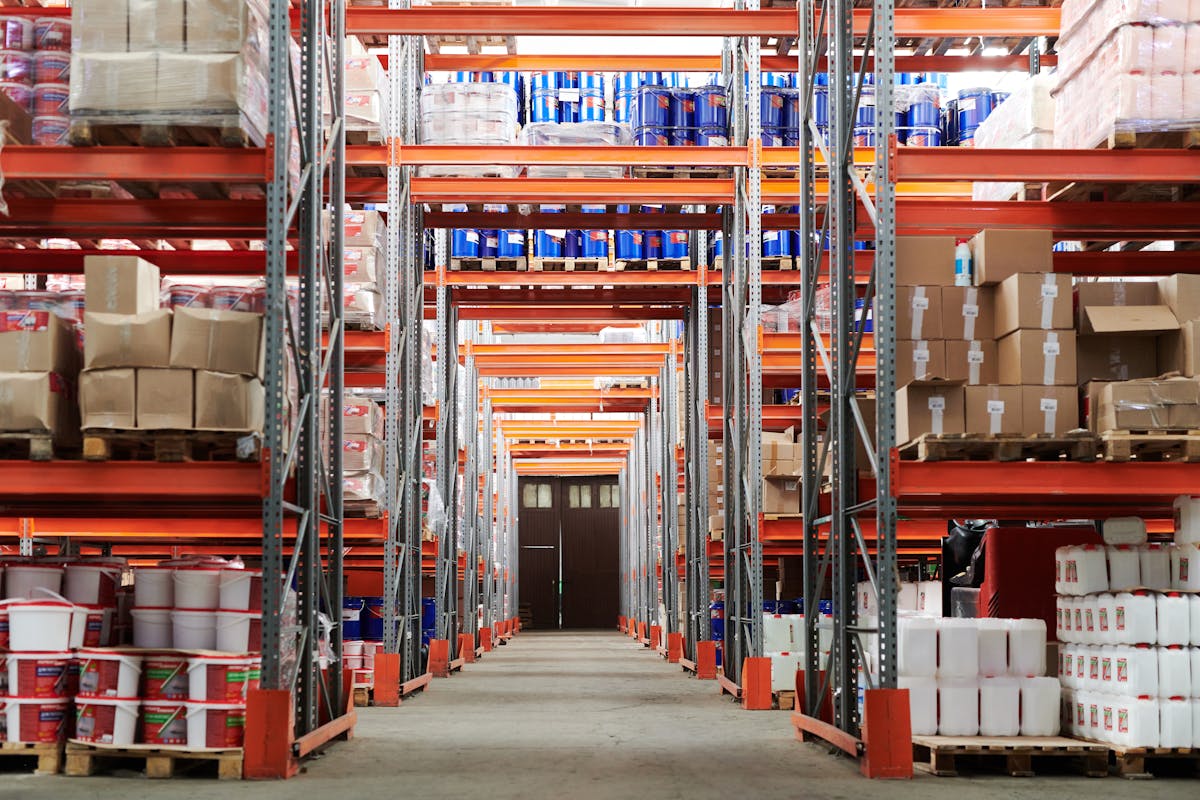
Shelves and Racking Systems
Movement equipment is equally crucial as storage equipment. Warehouse shelving and pallet racking systems are some of the most frequent characteristics of any distribution facility. These methods enable to make better use of space, especially vertical space, and make it easier to organize stock according to type, size or demand.
Pallet racking is ideal for storing large quantities of goods on pallets, while shelving is often used for smaller items, cartons, or hand-picked inventory. Depending on the goods being housed, flow racks, cantilever racks and heavy duty shelving may also be employed. Good storage solutions enable easy access to products, less clutter and better inventory control.
Choosing trolleys and carts
Order picking is one of the most critical warehouse functions and selecting carts or trolleys are utilized on a daily basis to make that process smoother. These carts enable the workers to choose several products in a picking run and then move them through the warehouse effectively.
Simple trolleys may suffice in smaller warehouses. In larger distribution centers, picking carts may have compartments, barcode holders or technologies to allow for faster and more accurate order picking. These technologies serve to reduce strain of walking and boost efficiency for one of the most labor intensive operations in the warehouse.
Packing Stations and Packing Equipment
Once selected, the items are properly packed for transit to storage or to the consumer. Packing stations are a frequent feature of warehouse equipment, as they provide a place to get products ready for shipping. A good packing station would have a workbench, tape dispensers, cutters, scales, printers and storage for boxes, labels and protective items.
Packing equipment can also comprise shrink wrap machines, strapping tools, void fill dispensers and sealing machines. These gadgets help workers pack faster, preserve products better and cut shipping mistakes in congested distribution centers.
Barcode Scanners and Inventory Equipment
Today’s warehouses rely primarily on barcode scanners and mobile inventory systems. These tools let you keep track of goods, confirm picks, update inventory records and cut down mistakes. Scanning barcodes is important in many warehouses for ensuring the appropriate products are kept, transported, packed and sent.
Handheld scanners are typical for everyday use, however in more complex procedures, wearable scanners and mobile computers may be employed. These technologies increase accuracy and give warehouse staff more visibility on stock levels and movement.
Dock Equipment
Another big category is dock equipment , as loading docks are some of the busiest areas in a warehouse. Dock levelers, dock plates, vehicle restraints and loading ramps are all designed to safely move items between trucks and the warehouse floor.
Not having proper dock equipment can make loading and unloading slower and more unsafe. These instruments help smooth the flow of incoming and exiting cargo, bridge height disparities and stabilize vehicles. For efficiency, distribution hubs where trucks arrive all day long need dock equipment.
Wrapping & Palletizing Equipment
Warehouses utilize wrapping and palletizing technology to safeguard items during storage and transport. Stretch wrap machines are popular because they can secure goods on pallets and limit the danger of movement or damage during handling. Palletizing machinery can also stack products in a stable and orderly way.
Such technology is very beneficial in big volume applications when hand wrapping would take too long. It also helps to increase consistency and avoid product damage in transit.
Safety Gear and Support Tools
Warehouses should be fitted with safety equipment such as guard rails, safety barriers, warning signs, floor markings, ladders, protective clothing etc. These things may not directly move merchandise but are nonetheless vital to the day-to-day operations. Often a safe warehouse is a more efficient warehouse as workers can move around in safety and equipment can be used in the proper way.
The most prevalent types of warehouse and distribution center equipment are all designed for the same purpose: keeping products organized and flowing effectively. The workflow includes forklifts, pallet trucks, racks, conveyors, bar code scanners and packaging stations. With the correct warehouse equipment, operations are safer, faster, and easier to manage.